Latest Instagrams
Showing posts with label Politics. Show all posts
Sunday, 25 March 2018

Working Women in Japan

Working Women in Japan
Sunday, 25 March 2018
Read post
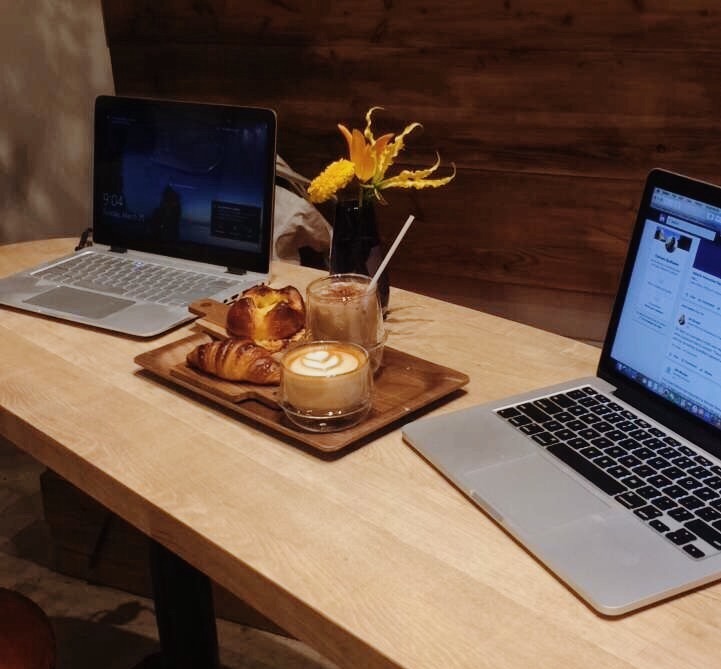

Japan ranks 101st on the World Economic Forums Gender Equality Index, it has one of the lowest rankings in the developed world.  It’s fair to assume then that working in a Japanese company would mirror this statistic, or at least serve to illuminate why the inequality exists in the first place.  What I learned was much more complex than I anticipated. I’m incredibly fortunate to have interned at a place that clearly valued women’s participation and their issues, but that’s not to say that concerns don’t exist and that we shouldn’t attempt to address them. In this post I wanted to explore some of the themes that emerged when I was able to interview various different women working at the company in different positions and age brackets. 
Things Are Changing:
There was a time (really not that long ago) when even the idea of having a family and working was impossible. One female employee felt that promotions were unattainable unless you were willing to sacrifice your family life.  As a female Senior Executive bluntly pointed out, when she was young very few women worked in the company and they most certainly didn’t keep working after marriage. To an extent this culture still exists in practice, I mean there is only 1 female executive with a child, and although the trend of women returning to work after starting a family is changing it is still in its infancy. What’s different today however is the open-mindedness of management to these concerns. Every one of the women I interviewed brought up concerns about balancing private life and work and feeling like they had to choose between the two. While this notion is heavily internalized by female employees, it doesn’t represent the reality they face. Two women noted that after speaking to their managers about their concerns they were surprised at how accommodating their seniors were. The attitude of management isn’t the same as it was 20years ago, and they are supporting women in pursuing all their goals (personal and professional). This goes for male and female executives alike. The senior female executive noted that her position provided her with the unique (and important position) to advocate for the maternity needs of women amongst her male colleagues. But this push isn’t just happening from women. Male managers are being more active and asking their female employees about their personal goals in order to help facilitate a system that works for everyone. 
Work / Life balance isn’t just about women though, and a lot of the time that seems to be the focus. In Japanese society domestic duties are still highly feminized, which means it can often be seen as the women’s responsibility to run the household, and there for men don’t require the same accommodations. In reality, promoting a balance has to include both genders partaking in household management. In the workplace that means accommodating flexible schedules for all employees; not just women. The senior executive (who attributes a lot of the ease in her role to her husband’s support for her work) noted that the young married man who returns home early is an example for his peers and is improving everyone’s understanding in the role men and women need to play to achieve this balance. 
Not everything’s perfect:
As one would expect there are still many concerns surrounding women in the work force. While Prime Minister Shinzo Abe’s hallmark “Womenomics” policy has increased the visibility of women in the workforce it hasn’t addressed a lot of the issues that women in most companies still face. Because there’s a lot of concerns and because I was fortunate enough to intern at a company that is incredibly progressive (and therefor I don’t have firsthand knowledge about many of the issues) I want to focus on just two main themes. 

Nomikai Culture:
The first of which is Nomikai Culture. Those who aren’t familiar with Japan may not be versed on what the Nomikai is, or how it can present a uniquely Japanese challenge for working women. So a brief intro before I continue. Nomikai’s are Japanese drinking parties that are embedded into work place culture. They occupy a weird space between the formal and informal and are slightly akin to a drinking meeting. So while most women agree that mistreatment at the office is rare and unspeakable, there seems to be more ambiguity around what is acceptable treatment of women at a Nomikai. In these situations the treatment of women can seem demeaning. Especially since entertaining is a large part of the female employee’s role at a Nomikai. The younger female employees I interviewed spoke about the necessity to look and act cute while also managing the table (serving drinks, handing out cutlery, etc.). The older Executive also agreed that women had a specific entertaining purpose at Nomikai’s, particularly when she was young. Back then the youngest female employee would sit next to the most superior male and be responsible for entertaining him. Because Nomikai’s are always exclusive to your team, and can include clients and other project members there is also a clash in the progressiveness of those individuals within the company and those outside it. One female employ pointed to a case where harassment from a client at a Nomikai motivated her to remover herself from a project. The blurred line between formal and informal at Nomikai’s seem to make all of this behaviour slightly more tolerable than would even be thinkable in the office setting. From the little time I have spent in a Japanese company and the limited interviews I did, Nomikai’s are one of the most fascinating and troubling aspects to me. 

Lack of Confidence: 
Not every aspect of women’s inequality is a result of active male oppression, and that’s evidenced by one of the most pressing issues I noticed for Japanese working women. A lot of what is holding women back is internalized. If we return briefly to the question of work/life balance a major theme among the female employees I spoke to was their own belief that both things were not simultaneously achievable. It wasn’t until discussing their concerns with superiors that they were aware of the support they could receive.  The result of these discussions was often a surprise to the female employees, who if not pushed would likely have been too shy to assert their goals for balance between both. If you lack the confidence to say what you are aiming for the proper support cannot be cultivated. 
 When I asked the female senior executive what she thought the biggest change in corporate culture is that facilitated increased participation of women she responded (quite surprisingly) that the change did come as much from the company as it came from herself. She noted that as she aged her confidence and self-esteem increased, meaning she was no longer embarrassed to ask for what she desired or pursue any goals she had set. If I compare this lack of confidence into the young women in the West I think it’s quite a different scenario. Yes the question of work / life balance still exists but the confidence to voice those concerns isn’t as marginalized as it is in Japan. 


The Future:
I am a bit surprised and extremely grateful of the incredible strides that this company has made to improve women’s experience in the workplace. I think discussions, not just among the women of the company but among all branches of employees will help to drive progress forward, and in a company where management is so open minded I don’t think that such discussions are a stretch or overly idealistic. That being said there is a lot of room for improvement and there needs to be discussions around topics like childcare, equality of pay, and so much more that I was unable to cover. But the future for Japanese working women is one that I (as a potential future working women in Japan ;) ) am incredibly invested in. I’ll end this post with the advice that a senior female executive gave. Her words ring true for young male and female employees alike, and they are not particularly restricted to a Japanese context. In essence her words were “be ambitious and be clear about your ambitious”. If you have goals, personal and professional, and you can articulate them both your superiors will be invested in helping you achieve them.


Till next time,

F.


Sunday, 4 March 2018

Period Positivity

Period Positivity
Sunday, 4 March 2018
Read post

yup those are tampons I'm wearing as earrings !!!

Last year on International Women’s Day I made a blogpost outlining some goals for the coming year. One year later and two of these goals have some tangible results. My first goal was to simply be more vocal about feminism and the inequalities that face women. If you ask anyone who knows me they can probably tell you that I’m extremely outspoken about women’s rights. The second goal was to increase my awareness on specific issues that women around the world face, and guys there’s LOTS of them. But over the past year one specific topic kept coming up, and that was related to period positivity. In this blogpost I want to really briefly highlight three sections of period positivity that I have learned more about over the past year. 
The Tampon Tax: 
Often referred to as “the pink tax” or the “period tax” the tax on tampons is a significant issue in countless countries around the world. This includes most of the 50 states in the U.S.A, the U.K., and other E.U states. It’s a big deal because it illustrates the fundamental inequality and injustice women face for their simple biological functions. Because tampons aren’t considered a basic necessity they fall under the “luxury” (rolls-eyes-heavily) category and are subject to VAT. So while this hygiene product is considered a luxury, Jaffa Cakes (an orange & chocolate biscuit) is considered an essential and is exempt from tax in the U.K. And Jaffa Cakes aren’t the only ridiculous “essential” tax-fee item to scrutinize. Men’s razors and condoms (along with many other products) are tax-free. While shaving and sex are a choice, bleeding once a month is not. This tax is bigger than just the illogical nature of it. It also fortifies the economic inequality between genders. Women already make less than their male counterparts, and the tax only makes tampons inaccessible to those already on the low end of the wage gap. NEWSFLASH: Homeless women still menstruate and doing so in a dignified way is a basic human right that they are often denied because of the high prices of tampons and other menstrual hygiene products.  Last time I checked having my period didn’t leave me feeling a sense of luxurious bliss akin to a weeklong spa get away. It’s time for governments to the end the period tax, period. 
Menstrual Taboo’s:
The world surrounding menstruation has been taboo for as long as I can remember. Even upon getting my period for the first time the ins and outs of biology and how to use different products was heavily glossed over. It just wasn’t talked about. I remember being in school and shuffling through my bag to find tampons or pads discreetly kept in a special pouch, and then immediately sliding the product up my cardigan sleeve as to ensure that NOONE caught a glimpse. If anyone was talking about menstruation the words “gross” or “ew” were often circling in the air- particularly from young boys. And this isn’t just a personal narrative, menstruation is taboo in so many societies. As I’ve gotten older I found I’ve become quite open about my period, I don’t try to hide my sanitary products of associate bleeding with disgust anymore. Despite this personal growth I noticed that most of the world still functions in the realm of taboo. If you buy sanitary products in Japan they won’t just bag them like any ordinary product in a transparent white bag, instead your purchase will be “discretely” stuffed in an opaque black or brown bag to obscure its contents. Even though I thought I was over being ashamed of my period, this simple act left me feeling dirty and humiliated all in a matter of seconds. The taboo around menstruation is starting to crack, campaigns like the #padmanchallenge are helping to challenge the stigma, but there is still a long way to go before girls and boys everywhere start to embrace periods as a natural, healthy and positive thing. 

Menstrual Health Management: 
MHM is an issue in many developing countries, and it’s something I have been exposed to through my coursework. Over the past semester I was able to take a close look at the consequences of poor menstrual health management in rural India and their leading factors. MHM is incredibly important for overall hygiene and quality of health, but in countries were strong social stigmas and taboos around menstruation exist proper menstrual hygiene practices fail to be cultivated. Accurate education about menstrual hygiene is severely lacking, and young girls internalize the inaccurate cultural beliefs that surround periods. Additionally, access to clean and safe menstrual hygiene products are scarce, due to lack of demand and due to high social stigmas. Improving menstrual health is instrumental to achieving the health and sanitation Sustainable Development Goals (SDGs). 

Although there is a lot to say about each of these areas and about period positivity in general I wanted to give a brief overview of some of the major issues that the world and women are still facing today. While the point has been to highlight a few areas that have really interested me recently, I hope it has sparked an interest in you to read more about these subjects or other subjects concerning women’s rights. I know this post was a bit of a longer read, but I really do think it’s necessary to have these conversations and to be open about them. Thanks for stopping by! 
xx,
F.


Friday, 9 June 2017

Funny Face & The Brainy/ Beauty Dichotomy

Funny Face & The Brainy/ Beauty Dichotomy
Friday, 9 June 2017
Read post
"Banish the Black, Burn the Blue, and Burry the Beige!" Because this film is all about PINK. And I don't just mean the colour, I mean the entire construct of femininity which is woven so deeply into our very understanding of the milky pastel off red hue we have come to label as "pink". Funny Face is one of my favourite movies, but today as I re-watched the Audrey Hepburn classic something hit me: This movie sucks. I say that for a simple reason, it sucks because it portrays the reality that "brainy" woman often face, and it perpetuates the idea that beauty is of the utmost importance. 


https://i.ytimg.com/vi/tVIH6VRXSbs/maxresdefault.jpg
A quick synopsis will reveal the dread this movie brings to my heart. When Fred Astaire's character (Dick Avery) is photographing for acclaimed fashion magazine Quality he stumbles upon brainy, plain, and peculiar Jo Stockton (Audrey Hepburn). Hepburn's character is completely disinterested in the world of fashion and beauty, instead she is enamoured by the Parisian intellectuals and the philosophy of the day- Empathicalism. When modelling opens up an opportunity for Jo to travel to Paris and meet the professor behind the philosophy she worships, Jo quickly takes it up. In paris she juggles her superficial duties of modelling with her desire to cultivate knowledge among the Parisian intellects. When finally confronted with the philosopher she idols a sad twist of affairs illustrates the reality many woman typecast as "brainy" face. The supposed enlightened intellectual has no care for Jo's genuine passion and interest in Empathicalism, to him, Hepburn's character is merely "a woman".  An object of sexual desire, not an esteemed or even worthy intellectual companion. She's cute and naive. To make matters worse Jo cultivates a romance with Astaire's character, who far more boldly acknowledges his own disdain at her intelligence. Dick Avery's love for Jo is calculated, he wants her only as she appears in his carefully curated photographs. Posed, frozen, and perfected, her flaws, her intellect, creativity, and curiosity are all glossed over by her wide eyes and pouty lips.


The movie isn't some anomaly, it's not as fictitious as it seems. I find there is always this dichotomy at work within peoples minds. Because I enjoy fashion, makeup, and beauty, I must therefor be unintelligent. On the flip side of that, those that know me purely through my academic channels find it hard to imagine that I, the keen girl who sits in the front row of all her seminars and never stops talking, can be into something as seemingly vain as fashion or pop-culture. This binary is extremely dangerous, and its taught to us (boys and girls) from an incredibly young age. Movies, like Funny Face, the media, and stereotypes breed these incredibly incomplete understandings of identity.


I often find myself confronted with these two seemingly opposing identities and I've struggled with trying to align myself clearly with one. What I have learned though, is that I am not simply academic or simply superficial. Woman are complex creatures, and our affinity for beauty or fashion is not some kind of comment on our intellect or self worth. Whether you fit perfectly within one, both, or none of the two labels prevalent throughout the film, you constitute a unique person and that is truly remarkable.

Have you ever juggled with these unrealistic notions?

XX,

F.
Wednesday, 8 March 2017

International Women's Day

International Women's Day
Wednesday, 8 March 2017
Read post


I am a feminist. I am a feminist 365 days of the year, 7 days a week and 24 hours a day. 

https://www.pinterest.com/pin/274930752233016700/

That being said though, there are certain times when I become more vocal about my feminism, and today (International Women’s Day) is one of those times. Today marks a day when woman around the world come together to express our strength, diversity, and our continuing fight for equality. As I scrolled through my social media today, I was inspired and awed by the volume of posts that contained messages of support for this day. These posts celebrated strong women, they highlighted where progress is still needed, but most importantly, they united us under the banner of feminism. Many posts, including my own, come from a state of radio silence on this issue. I, and many others I know, do not often vocalize our feelings towards feminism on social media. This year I have challenged myself to not only acknowledge International Women’s Day, but to commemorate it by setting a series of intentions and goals for the upcoming year, which will centre around promoting equality, honouring feminist progress, and challenging the status quo and oppressive structures. I would like to extend this challenge to you all, so that we can make a tangible impact on the ongoing fight for equality. 

My first goal: simply to do more reading. Feminism is a diverse and rich discipline and I am certainly not an expert. I want to read a variety of material to learn about the way in which health care provisions influence gender inequality, or to learn more about how international security is gendered. There are countless sources that trace the gendered nature of certain professions (i.e. nursing and child care), and books that cover feminism in every discipline. Just reading alone can open up so many doors and inspire me to find and focus on an area of feminism that really resonates with me. I believe we can all find an aspect of feminism to which we can apply our expertise and passion to create a difference, if we truly understand all the nuances and complexities of the issue. 

Second: I want to have an impact in my local community. There are countless organizations in every city, which work to improve gender inequality and to promote feminism. More specifically however, I would like to use my passion for yoga to empower young girls to be more body confident, healthy, and mindful. Through research and engagement with local youths I discovered that many teen girls (14-17) become disenfranchised from all sports for a variety of reasons. Some of these reasons include being self-conscious about their bodies, finding that sport is often gendered in masculine terms, or simply feeling like they do not retain control over their own bodies (specifically during puberty). Physical activity and sport can do a lot to improve a girl’s confidence. Yoga, in particular, allows girls to take control of their body (for example it has also been used with great success to help sexual abuse survivors to reclaim their bodies) and promotes self-love and a healthy body image. By teaching yoga workshops in schools around Birmingham I believe I can make a real impact on the way in which girls view body image and self-confidence, while also providing teens with a healthy way to cope with stress. I also hope that as a teacher I can present myself as an approachable mentor to students. As a university student with professional career goals, I believe it is essential for young women like me to encourage teens to pursue their own goals. 

Third: I want to use my voice and the platforms available to me (Facebook, Instagram, this blog, and my REAL voice) to continue to promote equality for all. When I reflect on how often I vocalize my feminism, I have noticed that I am most vocal when I am outraged. I rarely celebrate the strides that woman around the world continuously make in all sectors. This is not because progress isn't being made, but rather because it is often not reported on, or I am simply unaware and not looking for it. But the truth is, good news is inspiring. Hearing about and sharing positive stories of feminism can inspire and influence people to continue their own journeys and is therefore vital for future equality. This isn't to say that I will not, nor anyone should not, be active in vocalizing concerns against oppression or highlighting instances of injustice. This is equally as important. We must continue to talk about, discuss and openly try to address many of the issues woman around the world face. If we don't talk about it, nothing will ever change. So I hope to not just ignore the issues I am not well versed in, but to learn more about them by having open and honest discussions. 

I hope that some of these desires and goals have inspired you to create your own goals for International Women’s Day. I truly believe that these intentions are a way to celebrate feminism while also outlining the way in which each and everyone one of us can be active in making a change. Feminism cannot be a thing of convenience, we must all commit to change in order to see it.

[This post is dedicated to all the women who constantly inspire and motivate me. Thank You J, P, V, K, A, mum, and many more for everything you all do. From helping me edit this blogpost to always pushing me to be outspoken, fierce, brave, and for always believing in me.]

Xx,
F.
Saturday, 18 February 2017

The Confidence Gap

The Confidence Gap
Saturday, 18 February 2017
Read post


I remember the day I learned to speak. It was grade 10 and I was sat in my International Politics class acting like a lipgloss loving, boy crazy, pop-culture worshiping ditz. Don't get me wrong the class was interesting, it was actually one of my favourite classes. I found politics to be simulating and complex, I thought deeply about many of our class discussions. But I never turned up keen to debate the controversial issues or voice my own opinion. I just listened to what the teacher and others said, and if I was called upon I'd fumble and say something generic to perpetuate my ditzy persona. It wasn't until my teacher, to this day the lady I credit with getting me passionate about International Relations, pulled me aside after class one day and changed how I would carry myself. I don't remember the details of the conversation, but I do remember gaining some sense of confidence in my voice that day. I started to speak out even when I wasn't 100% sure of my answer or if it seemed like my opinion clashed with others. Time went by and I joined debating and Model United Nations (MUN). Four years later and I'm at university studying International Relations. Today MUN is an integral part of my life and has contributed to how I feel confident in my own knowledge, thoughts, and voice. Now don't get me wrong, I still love lipgloss and pop-culture, but I'm not some mindless drone whose caving under societal pressures. I choose to love makeup and fashion.


https://90sflashback.wordpress.com/2012/12/31/clueless-as-if/
This anecdote is one many young girls can relate to. A lack of academic confidence, and confidence in all areas is rampant amongst young girls. The phenomenon is called the Confidence Gap  and is responsible for many of the hurdles girls face as the enter higher education and progress in their careers. Class room silence amongst teen girls is a tangible issue. Compared to their male counterparts young girls are far less likely to speak in class and be active and engaged. By constantly doubting our capabilities us girls are creating and sustaining barriers which hinder our abilities to break through the glass ceiling.

http://www.momhead.com
I was quite lucky to have found a mentor and been in a school that empowered young girls. However, the reality is most schools are not like mine and girls are not given the tools in class that they need to be empowered and close the confidence gap. Thats why organizations that focus on empowering young girls play a critical role in shaping the female future. This Friday I was privileged enough to attend the Girls Night In Event hosted by mOmhead and GirlDreamer which is a community engagement networking, social, safe space for young girls. The first hour of the event was open mic spoken word where girls as young as 15 bravely took the stage to speak about a variety of topics including anxiety, social issues, feminism, love, and home life. Their confidence inspired me. I realized as a young girl the impact a space like this one could have made on me, and did make on me. After the open mic I had the opportunity to speak to many girls about confidence. What Confidence meant to them, how confidence felt, when it was undermined, and how to nurture it. Their answers were illuminating. In each of them I recognized a part of me.
http://thefbomb.org/tag/white-feminism/
For girls to succeed in all walks of life closing the confidence gap and empowering women is necessary. Full stop. That's why I believe working with organizations, volunteering, or even attending events like Girls Night In can improve the lines of communication and provide young girls with tangible mentors. It is quite an easy thing to identify a problem, but solving it is much more difficult.


XXX,
F.
Latest pins